Homeward, Slowly: Why the Return Leg Deserves a Plan Too
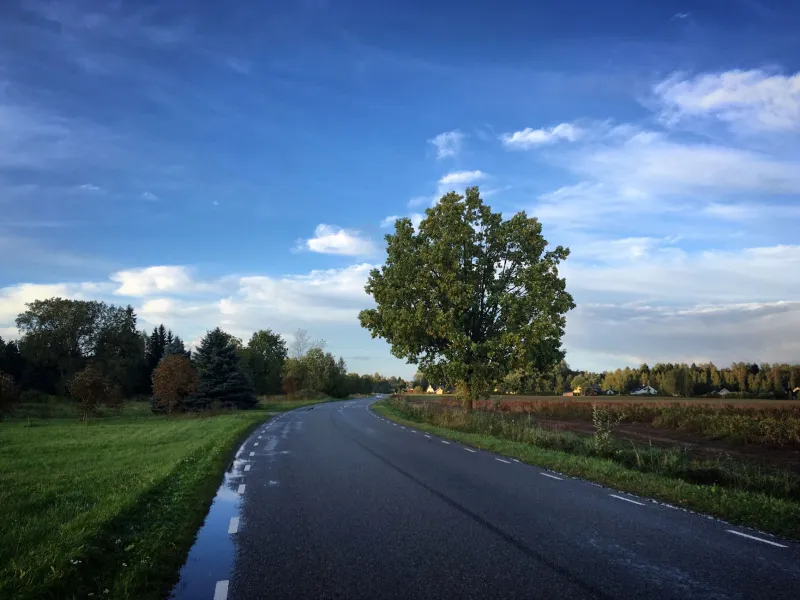
There is a moment on almost every day out when the fun quietly ends. It isn't when you leave the attraction, or when the car park barrier lifts. It's when somebody says, "Right, let's just get back." From that point the day turns into a logistics exercise: fastest route, familiar service station, a bag of something sugary eaten in silence while the satnav counts down the minutes.
And yet, ask anyone about a day out they still talk about and the return often sneaks into the story. The wrong turn that found a village nobody had heard of. The farm shop where you bought a pork pie you're still thinking about two years later. The lay-by where everyone got out to look at the view and, remarkably, nobody complained for a full four minutes.
We plan the outbound leg to the minute — tickets, timings, snacks, the argument about whether we've left early enough. The homeward leg gets nothing. Which is odd, because it's the last thing that happens, and the last thing is what tends to stick.
The hour that files the day away
Psychologists talk about the peak-end rule: we judge an experience largely by its most intense moment and by how it finished, not by the average of the whole thing. It's why a brilliant afternoon followed by an hour of frazzled dual carriageway can leave a slightly sour taste, and why a perfectly decent afternoon followed by a gentle amble home can feel, in retrospect, like a great day.
This isn't an argument for pretending a bad day was good. It's a nudge that ten minutes of thought about the ending is worth more than an hour of extra planning for the middle. The return leg doesn't need to be spectacular. It just needs to not be grim.
Three versions of the long way home
For families: the stop that isn't a service station
Service stations are fine. They are also identical, and your children will not remember the one with the slightly different pasty. A farm shop with a few animals outside, a park with a zip wire, a canal lock with a bench — any of these will do. The trick is to keep it small and to keep it close: aim for a stop no more than twenty-five minutes from home, and give it half an hour. It adds barely any driving and it turns the tail end of the day into a second, smaller outing. If they fall asleep in the last ten minutes, that counts as a success too.
For couples: the pointless detour
The joy of a day out for two is that nobody is timing you. Take a B-road instead of the A-road. Follow a brown sign to a viewpoint. Stop at a pub that looks like it does a decent bag of crisps and check whether it does. The only rule is that there is no destination — the detour is the point, not a means of reaching one. If you've ever driven past a turning and said "I wonder where that goes", this is your permission slip.
For solo: the slow fade
Driving home alone is underrated. No negotiation, no back-seat commentary, no compromise on the radio. Put a podcast on, pick the scenic route, and stop when you feel like it rather than when someone needs the loo. A solo day out that ends with a flask of tea in a quiet car park at dusk will sit in the memory far longer than one that ends with a sprint down the M6.
The low-pressure rules
A good return-leg detour has almost no admin attached, which is precisely why it works. A few guidelines worth borrowing:
- One stop, maximum. Two turns a gentle ending into an itinerary.
- Nothing that needs booking. If it requires a timed slot, it belongs in the main event.
- Check the closing time. Farm shops often shut at 5pm, National Trust cafés earlier still in winter. Turning up to a dark car park is its own kind of memory, but not the one you wanted.
- Cap the extra driving at around forty minutes. Beyond that it stops being a detour and starts being a second journey.
- Have a fallback. If the farm shop is shut and the pub is full, a nice lay-by with a view is a perfectly legitimate stop.
- In November, mind the light. Sunset is around twenty past four, so either do your detour on the way out or lean into the dark — a lit farm shop and a windscreen full of dusk is a genuinely good combination.
Where to actually look
You don't need a guidebook for this; you need to lower your standards slightly and raise your curiosity. Farm shops with a car park and a fridge full of local cheese. Village greens with a bench and a war memorial. Canal towpaths that run for a mile in the wrong direction and don't care. National Trust car parks, free if you're a member, which makes them the cheapest scenic stop in Britain. Churchyards, which are almost always open and almost always quiet. Brown signs saying "viewpoint". Garden centres, which are secretly excellent and serve better cake than most cafés.
The best ones are rarely the ones with a big sign. They're the ones you find because you took the turning and gave yourself twenty minutes to see what happened.
The bit where you get home later and don't mind
You roll onto the drive forty-five minutes after you'd planned, with muddy boots, a bag of apples and the faint smell of someone else's chips in the car. Nothing about the day has been extended in any meaningful way. But something has settled. The day has had an ending rather than a full stop.
That's the whole case for the long way home. It isn't really about the route, or the farm shop, or even the pork pie. It's about refusing to let a good day fizzle out at junction 12 — and giving it one last small thing worth remembering.