The Beautiful Blank: Why Your UK Day Out Needs a Little Nothing
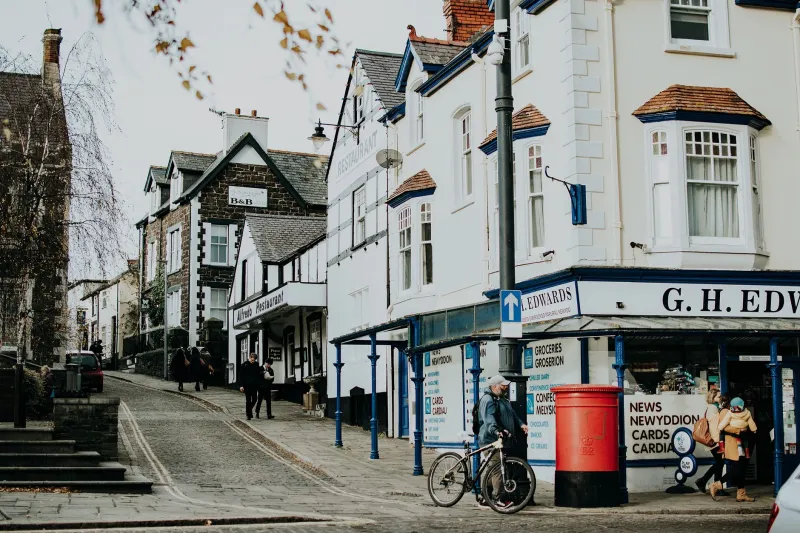
Most of us are chronic over-planners. Give us a day off and we will build a timetable around it: train times checked, lunch booked, tickets downloaded, a rough route sketched on the back of an envelope. There is nothing wrong with a bit of forward thinking. A good day out often depends on it. But somewhere between the first coffee and the last train home, we have started treating every spare minute as a problem to be solved.
It is not. The best days out usually have a hole in them.
The tyranny of the tight timetable
There is a particular sort of UK day out that looks lovely on paper. You catch the 9.12, walk straight to the market, browse for forty minutes, have lunch at 12.30, visit the museum at 2, catch the 4.45 home. Everything fits. Nothing is wasted. And yet, by the time you are back on the sofa, the day can feel like a series of appointments rather than an adventure.
A tight schedule leaves no room for the bit that makes a day memorable: the detour. The shop you did not know existed. The bench with a view you sat on for ten minutes longer than planned. The second-hand bookshop that swallowed half an hour and gave you a story to tell. These are not extras. They are often the whole point.
In 2026, our days out are easier to plan than ever. Timed tickets, table bookings and live travel updates are genuinely useful. But they can also tempt us into filling every gap before we have even arrived. The result is a day that runs to plan and somehow still feels a little flat.
What an unplanned hour actually looks like
This is not an argument for abandoning the plan altogether. A completely shapeless day can be lovely, but it can also end with everyone standing on a pavement asking what next. The trick is to keep the anchors and leave space between them.
Build in sixty to ninety minutes with nothing scheduled. Put it after lunch, when the day has a natural lull. Or slot it between two fixed points — the castle and the train home, say — so it has edges without feeling rushed. Agree a rough meeting point, then let people drift.
It helps to think of it as a beautiful blank rather than a gap to be filled. You are not failing to plan. You are planning for the possibility that something better might turn up.
Three places that reward a wander
You can do this anywhere, but some places are especially good at it. A market town is ideal. Pick one with a proper high street and a few side lanes, and resist the urge to map every charity shop. Towns like Ludlow, Frome or Beverley reward slow feet and curiosity. If there is a market on, even better. The best stall is rarely the one you set out to find.
A coastal path is another fine place for an empty hour. Not a full clifftop epic — just a stretch of promenade or a short path with a view. Norfolk, Pembrokeshire, Northumberland: the names matter less than the willingness to stop. Sit on a wall. Watch the water. Let the wind do the entertaining.
City quarters work too. Not the whole city, just one small patch. The lanes around Norwich, the arcades of Leeds, the harbourside in Bristol, the side streets off any high street. Give everyone a meeting point and a time, then let them loose. Teenagers may surprise you. Grandparents may find a bench. Small children will find a puddle, inevitably.
How to build it without losing the shape of the day
A few practical bits help. First, anchor the day with one or two fixed points — a meal, a train, a timed entry — and protect the space between them. Second, decide where you will regroup. A station concourse, a market clock, a specific café. Third, carry a little cash and a layer. An unplanned hour is much more enjoyable when you are not cold, hungry or unable to buy a bag of chips.
It also helps to make a maybe list rather than a must-do list. Three or four possibilities, no pressure. If you get to one, lovely. If you spend the hour watching pigeons in a square instead, that counts too.
And resist the urge to fill the blank at the last minute. That is the whole test. The empty hour is not a buffer for extra activities. It is the activity.
The bit you remember
We tend to remember days out in fragments: a ridiculous conversation, a sudden view, the chips eaten on a sea wall, the shop where someone found a truly awful hat. Very few of those moments were booked in advance. They happened because there was room for them to happen.
So keep the plan. Book the lunch. Catch the train. But leave a little nothing in the middle. Your future memory will thank you for it.